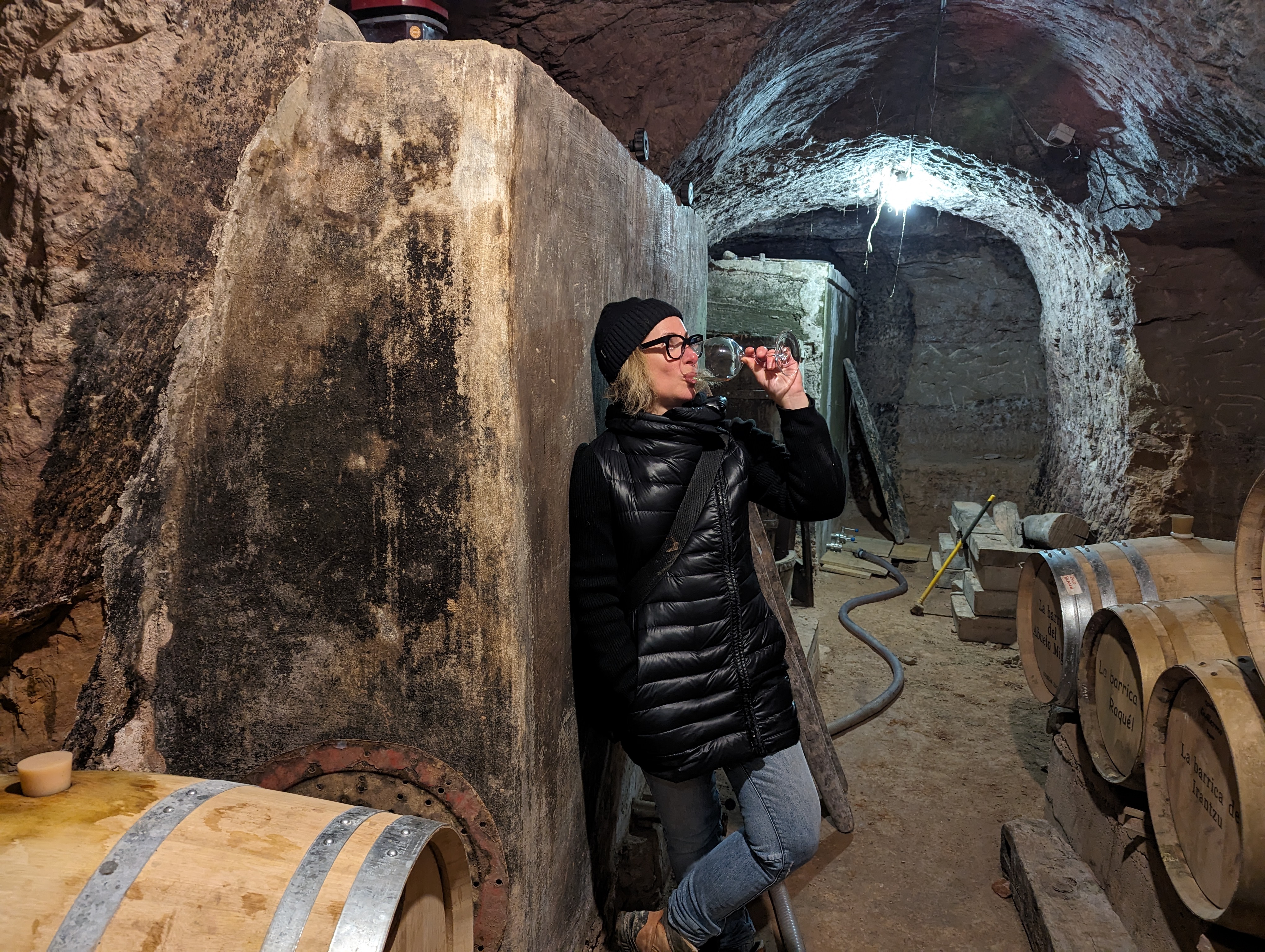
January 2nd, 2024. Week five in Spain:
To the naked eye, it must have looked like I was all alone. But I wasn’t. Not even close. Let me share a little secret—when you’re a solo traveler adventuring like me, the most peculiar company tags along.
The near-distant echoes of New Year’s Eve in San Sebastián, for example. What a night. Even a full day later, with my bus barreling down the A-15 highway past Pamplona, they had me slipping in and out of daydreams, taking me back—packed pintxos bars, crisp Txakoli, buzzing cobblestone streets filled shoulder to shoulder with drunken revelers, the midnight fireworks, my hotel rooftop—those echoes stuck with me. They spun me out for a good long while as I gazed through the large rectangular window of my coach. Then we pulled into the bus station and they took off. Once again, I’d arrived solo. My home base for the next few weeks. Logroño, capital city of La Rioja.
A lesser-known city, slightly off the beaten tourist’s path. True to form, I took the long and windy, roundabout way to get there. Visiting smaller wine regions as I traveled, people questioned my plans, “What are you going to do for two and a half weeks in Logroño?”
I laughed at first. But wait a minute…was I expecting too much? Would curiosity lull me down the road to disappointment? I mean, I’m a pro at entertaining myself wherever I go (especially if there’s good wine), but was I mistaken in my desire to visit Spain’s most widely recognized DOCa? Could it actually turn out to be a bit of a letdown?
One winemaker I’d met described Rioja as a place of mass-produced wines, saying it’s lost its true identity to international markets. That growers have been tearing up their Tempranillo and planting profitable varieties like Cabernet Sauvignon. And while Rioja is an excellent place to study oenology and viticulture, if I really want to understand what Spanish wine can be, I should go visit a region like Ribera del Duero instead, because, as he’d put it, Ribera del Duero has more soul.
But I’d gone down there on a hunch. There had to be more to it than that. A Rioja most outsiders aren’t likely to know. Not just an array of austere labels like Viña Tondonia or Castillo Ygay, not just the plonk they sell on the bottom shelves at grocery stores either. I’d gone to experience the culture, to get an honest sense of place, something captivatingly quotidian, the exquisite every day. I’d wanted to deepen my understanding of Rioja, its terroir and indigenous grapes, and the families who’ve been there making wine for generations.
Two and a half weeks, fourteen bodegas. The following series details my first visit to Rioja. Gracias sí y salud.